The Dopamine Loop: How Crypto Markets Are Engineered to Exploit Your Brain
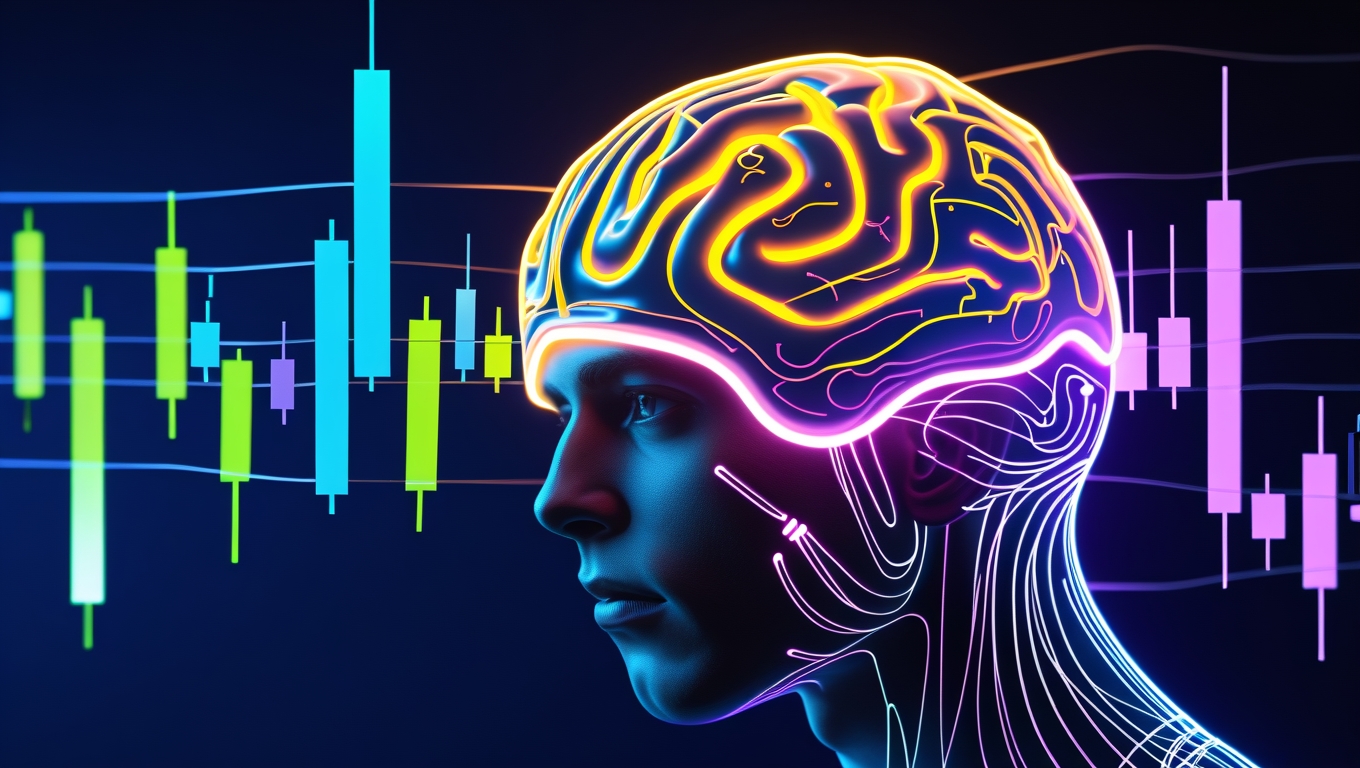
Crypto is the most sophisticated dopamine machine ever built. Understanding the neuroscience isn't optional — it's survival.
 ⊕ zoom
Las Vegas didn't invent the dopamine loop. Evolution did. Vegas just figured out how to weaponize it. And then, sometime around 2017, crypto did Vegas one better.
Twenty-four hours. Seven days. No closing bell, no circuit breaker, no cooling-off period. A market that never sleeps, feeding a brain that was never built for this.
If you have ever checked your portfolio at 2 AM, refreshed a chart during a family dinner, or felt your heart rate spike at a price alert — you are not undisciplined. You are a mammal with a reward system that was designed for a world that no longer exists, plugged into a machine that was accidentally engineered to exploit every vulnerability in that system simultaneously.
Understanding this isn't about feeling better about bad trades. It's about understanding why the trades keep happening.
Variable Reward: The Mechanism That Makes Slot Machines Addictive
In the 1950s, B.F. Skinner ran a series of experiments on pigeons. He found that the most powerful conditioning schedule wasn't continuous reward (reward every time) or no reward. It was variable reward — reward at random intervals, unpredictably.
Variable reward schedules create compulsive behavior. The animal keeps pressing the lever not because it expects a reward, but because it might get one. Uncertainty, not certainty, is the driver. This is why slot machines pay out in bursts. It's why social media feeds are endless scrolls rather than curated daily reports. And it's why a 24/7 market with random-interval price spikes is the most psychologically compelling financial instrument ever created.
Crypto is a variable reward machine that never, ever turns off.Bitcoin moves 3% while you sleep. A meme coin 10x's over a weekend. You miss it — or you catch it and it feels like prophecy. Either way, your brain logs the event and demands to stay connected, to stay watching, to never look away because the next spike could come at any time.
This is not a character flaw. It is a designed outcome of the market structure, even if unintentional.
FOMO Is Dopamine Chasing
Fear of missing out isn't an emotion. It's a neurochemical event.
When you watch an asset run 40% without you, your brain doesn't process that as a neutral non-event. It processes it as a loss — even though you never held the position. Behavioral economists call this "relative deprivation." Your brain compares what happened to what could have happened, and generates a pain response equivalent to an actual loss.
That pain creates pressure. The pressure creates urgency. And urgency is the enemy of good entries.
Eighty percent. In a market that has produced more millionaires per dollar invested than almost any asset class in history. The gap between what the market offers and what retail extracts from it is almost entirely explained by psychology, not analysis. Retail buys the top because FOMO peaks when price peaks — when the dopamine loop in millions of brains fires simultaneously, creating coordinated buying at precisely the wrong time.
This isn't stupidity. It's evolutionary hardware running in the wrong environment. Your ancestors who acted urgently on signals of opportunity survived. The ones who waited and deliberated while a predator ran off with the food did not. That urgency served you. In crypto, it's a liability.
The Narrative Cycle Is the Dopamine Delivery System
The psychological architecture of crypto markets has a third layer beyond volatility and variable reward: narrative.
Meme coins, ecosystem narratives, L2 wars, the halving cycle, institutional adoption — these aren't just market themes. They are story-driven dopamine triggers that give retail traders a reason to believe this time is different. The narrative creates meaning. Meaning creates conviction. Conviction overcomes the rational part of your brain that would otherwise pump the brakes.
Every major retail capitulation in crypto history has been preceded by a narrative strong enough to override risk management: "ETH will flip BTC," "DeFi is replacing banking," "this NFT collection is the next blue chip." The narrative isn't a side effect of the market — it's part of the mechanism that moves price, because it moves people.
This is exactly the problem the InDecision Framework was built to solve. The framework doesn't start with narrative. It starts with six factors — Daily Pattern, Volume, Timeframe Alignment, Technical Confluence, Market Timing, and Risk Context — each weighted, each scored before a position is opened. The framework creates a mandatory deliberation step between the emotional trigger (the narrative, the alert, the FOMO spike) and the execution. You cannot score a 75+ conviction rating on a meme coin you saw on Twitter 20 minutes ago. The structure is the protection.
What Discipline Actually Means in This Context
Most trading advice frames discipline as willpower. "Don't be emotional." "Stick to your plan." As if the solution to an engineered dopamine machine is just trying harder.
It isn't.
Willpower is a depletable resource. You cannot out-willpower a system that was accidentally optimized to exhaust it. The actual solution is structural: remove the decision from the emotional state. Create a process that requires you to engage your prefrontal cortex — the deliberative, analytical brain — before your limbic system can act.
That's what pre-trade frameworks do. That's what position sizing rules do. That's what mandatory waiting periods do. They aren't rules for weak traders. They are the architecture that gives your rational brain enough time to come online before your emotional brain has already clicked Buy.
The market will always be more patient than your dopamine system. The edge goes to the trader who builds a process that accounts for that reality — not one who pretends the dopamine system doesn't exist.
Know your hardware. Then build around its limitations. That's not weakness. That's engineering.
The trading intelligence methodology behind this is taught in the Competitive Intelligence track. 8 lessons.
Start the Competitive Intelligence track →Explore the Invictus Labs Ecosystem
Follow the Signal
If this was useful, follow along. Daily intelligence across AI, crypto, and strategy — before the mainstream catches on.
Polymarket Integration Footguns: USDC.e, Proxies, and the Wallet You Didn't Fund
USDC.e is not USDC. EOA signing is not proxy signing. The wallet you funded is not necessarily the wallet your bot is polling. A developer's guide to the Polymarket integration traps that will cost you a night if you do not know them up front.

Bitcoin’s Next Demand Shock Won’t Come From Humans
The market still models Bitcoin demand as a human behavior problem. That model breaks the moment autonomous agents start settling value natively on-chain.

From Framework to Signal: Building the InDecision API
The InDecision Framework ran for 7 years as a closed system — Python scorers feeding Discord and a trading bot. Turning it into a public API forced architectural decisions that changed how I think about signal infrastructure.