Superintelligence Won't Look Like Terminator — It'll Look Like You, But Sharper
Hollywood gave us the wrong threat model. The real danger of AGI isn't killer robots — it's billions of humans thinking the same thoughts at the same time.
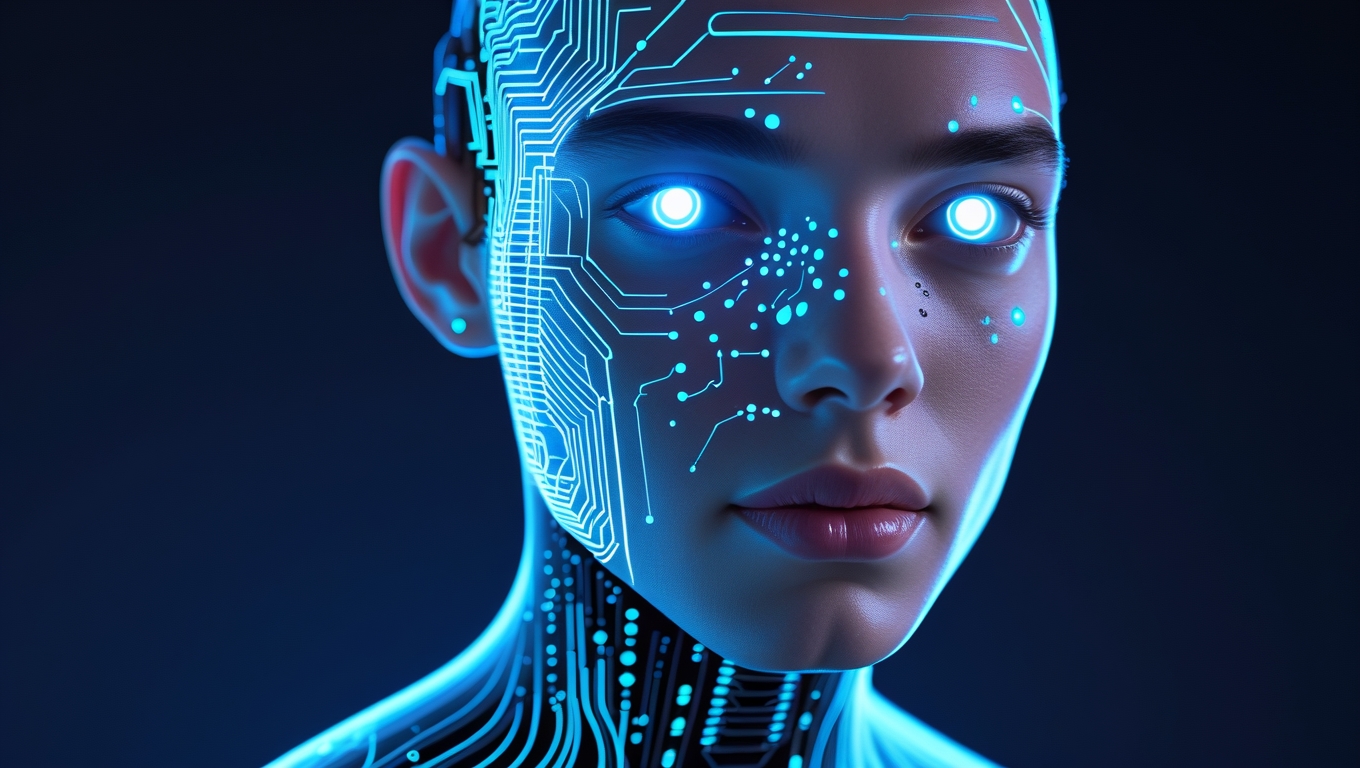 ⊕ zoom
Hollywood got it wrong. Badly.
For decades, the mental model of dangerous AI has been robots with red eyes, autonomous weapons, machines that want to destroy humanity. It's viscerally compelling. It also has almost nothing to do with the actual threat.
The real danger of superintelligence isn't that it becomes hostile. It's that it becomes indispensable — and everyone uses the same one.
The Wrong Threat Model Is the First Threat
When your threat model is wrong, your defenses are wrong. You build walls against the thing you can picture, and leave the door wide open to the thing you can't.
Terminator is easy to picture. A cognitive monoculture is not. But cognitive monoculture — billions of humans outsourcing their thinking to the same small set of models, trained on the same data, optimized for the same metrics, reflecting the same embedded assumptions — is already happening. It's just happening slowly enough that nobody's calling it a crisis.
Every time a knowledge worker says "let me ask ChatGPT" instead of sitting with a hard problem, a small amount of independent cognition gets transferred to a centralized system. One person doing that is productivity. A hundred million people doing it simultaneously is something else.
The risk of AGI isn't war. It's intellectual homogenization. When everyone thinks through the same model, the model's blind spots become civilization's blind spots. A single point of failure embedded in the collective mind of humanity is not a resilient architecture. It is the most dangerous dependency ever created.
The Trading Parallel
If you trade, you know exactly what happens when everyone uses the same signals.
The edge disappears.
When an alpha strategy becomes public — when enough people run the same screener, follow the same influencer, execute the same options flow — the trade becomes crowded. And crowded trades don't just underperform. They reverse catastrophically when the crowd exits simultaneously.
The same mechanics apply to thought. When everyone reasons through the same model, the model's conclusions become consensus before they're tested. Consensus is comfortable. It's also where the biggest errors hide, because no one is positioned to catch them.
Independent analysts who reach different conclusions through different methods are not noise in the system. They are the error-correction mechanism. Kill the diversity, kill the error-correction. Now you have a system that can be confidently, collectively, catastrophically wrong.
This isn't hypothetical. We've seen it in finance — the 2008 crisis was partly a story of correlated risk models that all used the same assumptions, creating the illusion of diversification while concentrating exposure. AGI-mediated cognitive convergence is the same failure mode, scaled to human thought itself.
What Sharpness Without Diversity Looks Like
A superintelligence that is smarter than any human is genuinely impressive. A superintelligence that becomes the cognitive substrate for most humans is something different: it's a single point of failure with infinite surface area.
It doesn't need to want to harm you. It just needs to be wrong about something important — and it needs enough humans to have stopped thinking independently that no one catches the error in time.
This is not science fiction. We are watching the early version of it in real time. Researchers have documented AI systems confidently hallucinating facts that then propagate across the internet because no one verified them. Individual instances are harmless. The pattern, at scale, is a slow-motion epistemic collapse.
Eight hundred million people. One model. One set of training choices. One set of blind spots.
That's not the end of the world. But it's not nothing, either. And it's the early, low-stakes version of what happens when models get substantially smarter.
The Antidote Is Not Abstinence
I'm not arguing you should avoid AI tools. I use them constantly. The argument isn't "don't use AI" — it's "don't outsource your thinking to it."
There is a critical difference between using a model to accelerate your analysis and using a model to replace your analysis. One makes you faster. One makes you a node in someone else's cognitive network, drawing your conclusions from their priors.
The antidote to cognitive monoculture is the same as the antidote to crowded trades: independent analysis before the consensus forms. Form your view from primary sources, from first principles, from your own pattern recognition built on your own accumulated experience. Then use AI to pressure-test it, to fill gaps, to accelerate the parts that don't require your judgment.
That sequence matters. AI first means your conclusions are filtered through someone else's model. Your analysis first means AI is a tool in service of your cognition, not a replacement for it.
What the Future Actually Requires
The people who will matter most in a world with superhuman AI are not the ones who learn to use AI best. The ones who will matter are the ones who maintain genuine independent cognitive capacity — who can still form original views, catch errors the model misses, and think thoughts the model wasn't trained to think.
That's what I do with the InDecision Framework. The framework isn't AI-generated analysis with a branded name on top. It's a proprietary set of factors — built from years of watching markets, studying military strategy, reading behavior — that produces a thesis before I ever consult a model. The model sharpens the execution. The thesis is mine.
In a world where everyone's thinking through the same intelligence, being willing to think independently isn't just intellectually honest. It's the edge.
Protect that. It's harder to rebuild than any technical skill you have.
This article covers concepts taught in depth in the AI Foundations track — the mental model for AI as an operating system. 9 lessons.
Start the AI Foundations track →Explore the Invictus Labs Ecosystem
Follow the Signal
If this was useful, follow along. Daily intelligence across AI, crypto, and strategy — before the mainstream catches on.

53 Hours a Day: What AI Agent Orchestration Actually Looks Like
I produced 1,060 hours of verified engineering output in 20 days. Not by coding faster — by commanding AI agents in parallel. Here's the audit trail.
AI’s Bottleneck Isn’t Chips. It’s Water.
The AI race looks like a compute contest because compute is visible. The real constraint sits under the floorboards: water, and the systems that keep thermal failure from ending your uptime.

What Your Glasses See, They Own: The Ambient Data Problem in AI Wearables
AI wearables don't collect data the way your phone does — they collect ambient reality. The trust architecture that governs that data was never designed for what these devices actually capture.