Iran's A2/AD Play: Why the Strait of Hormuz Just Got More Complicated
Whether or not Iran's new naval missile is actually hypersonic is the wrong question. The right question is what a 90-mile sea-based SAM bubble does to the strategic calculus for US carrier operations in the Persian Gulf.
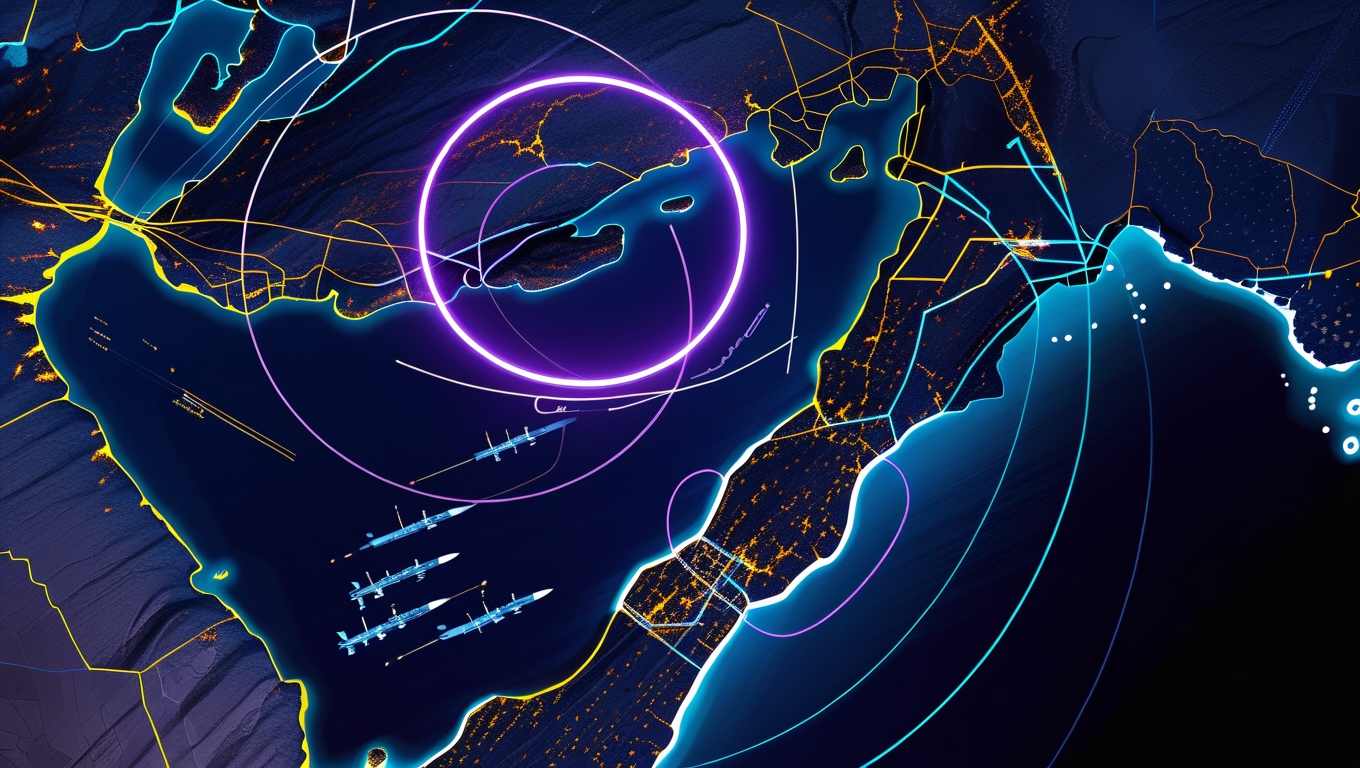
The weapon doesn't matter as much as what the weapon forces the adversary to plan for.
Iran's test of its new Siad 3G naval air defense missile in the Strait of Hormuz — launched vertically from a naval corvette, claimed to be hypersonic, described as projecting a 90-plus-mile protective bubble over the ocean — is being covered primarily as a weapons story. Iranian capabilities, whether the hypersonic claim holds up (it doesn't at Mach 5+), what it can or can't intercept.
That's the wrong level of analysis. The strategic story isn't about one missile system. It's about Iran's continued refinement of an anti-access/area denial doctrine in the world's most critical maritime chokepoint, and what that means for US power projection capability in the Persian Gulf over the next decade.
The A2/AD Doctrine and Why It Matters
Anti-access/area denial is the strategic framework that has reshaped naval warfare planning since the late 1990s. China pioneered its application systematically — developing layered missile systems, naval assets, and electronic warfare capabilities specifically designed to make it prohibitively costly for a US carrier strike group to operate within a defined geographic zone.
The logic isn't to defeat the US Navy in a traditional engagement. It's to raise the cost of engagement high enough that the operational calculus shifts. If a carrier must stay at a range where its aircraft can't reach their targets, the carrier's power projection capability is effectively degraded without firing a single shot.
The supreme art of war is to subdue the enemy without fighting.
— Sun Tzu · The Art of War
Iran's Strait of Hormuz A2/AD development is a direct application of this principle, scaled to a chokepoint where even a partial capability creates outsized strategic leverage. The Strait is 21 miles wide at its narrowest point and controls approximately 20% of global oil trade. A credible sea-based SAM system that forces US aircraft to operate at greater standoff distance changes the entire air campaign planning for any Persian Gulf operation.
The Chokepoint Calculus
The Strait of Hormuz is one of the most studied strategic bottlenecks in military planning. It's narrow, it's shallow, and it's flanked by Iran on one side and Oman and the UAE on the other. Any US military operation that requires control of the Gulf must account for Strait access.
Clausewitz's concept of "key terrain" — ground that, if controlled, provides decisive advantage — applies perfectly to the Strait of Hormuz. Whoever can threaten that chokepoint with credible denial capability holds strategic leverage over anyone who depends on passage through it. Iran understands this. Every new naval capability they develop in the Gulf is about extending that leverage.
Here's what a 90-mile sea-based SAM bubble actually means operationally: if Iran can maintain a corvette with this system in or near the Strait, US fixed-wing aircraft operating from carriers in the Gulf face a threat envelope that either forces them to higher altitude (reducing accuracy for ground attack missions), greater standoff range (reducing the coverage available to carrier air wings), or attrition through SAM suppression missions before the main operation begins.
None of these outcomes are catastrophic in isolation. Combined with Iran's existing shore-based SAM systems, its ballistic missile capability, its drone swarm capability demonstrated repeatedly in the region, and its mine warfare capability, the layered A2/AD picture becomes significantly more complex.
The Information Warfare Component
Iran's claim that the missile is hypersonic is technically questionable. Hypersonic traditionally requires sustained flight at Mach 5 or greater — a threshold the Siad 3G's described performance profile may not reach.
But the claim isn't primarily a technical claim. It's a strategic communication.
When Iran announces "hypersonic capability," it's creating uncertainty in adversary planning staffs. Hypersonic missiles defeat the current generation of SAM systems designed around slower, predictable threat envelopes. Planning staffs must now develop contingencies for a hypersonic naval threat — spending planning resources, developing countermeasures, potentially adjusting carrier positioning — even if the underlying capability is exaggerated.
Deterrence through uncertainty is a documented strategic technique. You don't need to have a capability to benefit from the adversary's doubt about whether you have it. Iran's missile announcement, true or exaggerated, forces a planning response that imposes costs regardless of the actual technical truth.
This is the information warfare dimension of A2/AD — capabilities don't need to be fully proven to generate strategic effects. The demonstration creates the uncertainty. The uncertainty constrains planning. The constrained planning limits options. Iran has learned this from watching China apply the same principle with its DF-21D "carrier killer" anti-ship ballistic missile, which has never been tested against an actual carrier but has significantly influenced US carrier deployment doctrine regardless.
What This Means for Regional Strategy
The context of this test — happening alongside the El Mencho operation in Mexico and heightened US-Iran tensions around Iran's nuclear program — is not coincidental.
Iran is demonstrating capability in the period between Trump's 10-day ultimatum and any US military action. The missile test serves as a credible reminder of what the cost of military action in the Gulf looks like. It's not a direct response (the Strait missile test and the El Mencho operation are unrelated), but the strategic timing functions as signaling.
The US response calculus in any Gulf operation has just gotten marginally more complicated. Not because the Siad 3G is a decisive capability — it isn't. But because A2/AD effectiveness compounds. Each addition to the layered denial envelope raises the aggregate cost of operating in the Gulf. The strategic direction is the key data point, not any single system.
When a regional power is systematically investing in A2/AD capabilities over years, the operational planner's correct conclusion is not "this individual system doesn't change much." It's "the trend line leads somewhere I need to prepare for, even if I'm not there yet."
Explore the Invictus Labs Ecosystem
Follow the Signal
If this was useful, follow along. Daily intelligence across AI, crypto, and strategy — before the mainstream catches on.

CJNG's Center of Gravity Just Fell. Here's Why That Makes Mexico More Dangerous.
Killing the most wanted cartel kingpin in the world sounds like a victory. Clausewitz would say: it depends on whether he was actually the center of gravity — or just the most visible node.

Ukraine's Robot Army and the Death of Attrition Warfare
In July 2025, Ukraine captured Russian soldiers using an assault force made entirely of drones and robots. The future of land warfare isn't theoretical anymore — it's operational. The strategic implications for everything from conscription to defense economics haven't been absorbed yet.
Boyd's OODA Loop Is Not a Combat Framework — It's a Framework for Life
Colonel John Boyd designed the OODA loop for aerial dogfights. But the insight that Orient is the most important phase — and that Orient contains all your biases — makes this the most powerful cognitive framework for traders, engineers, and leaders.